Saturday, January 16, 2010

My Other French Aunt and Uncle

In the 1970s, my parents spent two years in West Africa as peace corps volunteers. While they were there, my mom's sister joined them for a visit, met a Sean Connery-lookalike Frenchman completing his “service militaire,” and the rest is history. I have two lovely French cousins who are among my favorite people in the world, and visits to see my aunt and uncle in Brittany are heavenly, relaxing orgies of delicious food, full-bodied wine and good conversation.

This past September, I acquired a second set of French aunt-and-uncles. (After all, one really can't have too many.) By rights, they should belong to La Moustache, since my new Oncle D is Moustache's mother's brother, and Tante M is his girlfriend. However, I've adopted them instead.

Tante M is a teacher, like me, but she retired last year. Thinking she'd be sad when the new schoolyear started, she and Oncle D planned a visit to New York in September. Hence they unwittingly ended up chez nous in Brooklyn, right smack in the middle of our breakup.

This could have been a very awkward situation, and I won't lie, there were moments when it was. I was alternately furious and devastated, and would sometimes pull Moustache into our bedroom so I could vent my tears and recriminations away from Oncle D and Tante M. At first, we pretended that everything was fine between us. However, one day when Moustache was at work, I was talking to Oncle D and Tante M about my career, and told them that I might be moving to Boston. Oncle D interjected, “But what about Moustache? It would be so hard for the two of you to be apart!” I paused, unsure what to say. Then I decided to go with the truth: “Well, you see, Moustache might be leaving me anyway. He's thinking about going on a trip around the world, and he doesn't want me to come.”

I would have stopped there, but Oncle D and Tante M's reaction was empathetic and sincere, and they encouraged me to say more. They told me that they couldn't imagine going through so many difficult things simultaneously. They talked to me about their own past relationships and divorces, and confided that therapy had helped them figure out what they wanted out of a relationship and how to move on when it wasn't working; I shared stories about my own Wise Woman, and told them of my frustration that Moustache refused to get therapy or talk about his feelings. A few days later, Tante M stepped into my bedroom with me and said, “I can see how sad you are. Let it out.” I cried and cried as she rocked me in her arms.

I left shortly thereafter, fleeing to a friend's house to avoid having to spend more time with La Moustache. Oncle D and Tante M encouraged me: “You can do it! Just don't let yourself look back. Keep up your strength.” They called every couple of days while they were still in Brooklyn, and we met up for coffee. After they went back to France, they continued to support me via e-mail; Oncle D even sent me a recommendation for a book about divorce that he thought I should read.

La Moustache's parents used to come for long visits at least once a year, and I eagerly looked forward to them. I was particularly close with his mother, who I considered to be almost like a second mother or an auntie to me, and losing that relationship was one of the many hard things about our breakup. I feel so lucky that Oncle D and Tante M came along when they did, and that I can maintain a relationship with them since they're not as close to La Moustache.

A couple of days ago, Oncle D posted a video on his Facebook page with a message beneath it: “It's for you Heathen.” It was a video of a French singer singing a song entitled, “Le premier jour (du reste de ta vie)” – “The First Day (of the Rest of Your Life).” It's totally cheesy, and I'm sure it would make La Moustache roll his eyes and make a snide comment. And I love it.

Tuesday, January 12, 2010

Wait, What's This Called Again?

My name is Heathen, and I have a disability. It's not a physical disability, nor has it ever been diagnosed by a professional. It's self-diagnosed, but that doesn't make it any less debilitating.

My disability is a condition called “word retrieval deficit.” I think everyone has it sometimes. You know the word or name, it's on the tip of your tongue... but your brain can't quite formulate it, and you feel like an idiot. (Sometimes it's also referred to as TOT, for "tip of the tongue.") I once saw a preview for a documentary about the tobacco industry featuring an interview with a beauty pageant winner. In answer to a question, she said something along the lines of, “Well, the thing is, we're just really dependent on tobacco for the... umm, the... what's that word?” The interviewer supplied it: “Economy.” The audience in the movie theater erupted in laughter. And I thought, “Hey, just cause she forgot the word 'economy' doesn't mean she's dumb!”

It easily could have been me in that clip. I'm pretty sure some people have encountered my word retrieval issue and thought I was missing a couple of marbles. For instance, for years I worked once a month as a check-out girl at a co-op I belonged to (it's kind of famous, some might even say infamous... you may have heard of it). I loved my job, and often thought to myself, “I wish I could do this full-time. I love chatting with people and asking about their plans for the food they're buying, and it's SO much easier than teaching!”

However, there was one aspect to my check-out girl job that I hated. Every time anyone bought fruits or vegetables, which was pretty often, I'd have to look them up on my little computer alphabetically. It was here that my disability became a problem. I'm not only talking about rare foods like rutabagas or kumquats; I'm talking avocados (and it's a rare co-op shopper who goes home avocado-less). I dreaded Brussels sprouts. Cabbage was my nemesis. I think it even happened once with broccoli.

Of course, I would spot the problem food quickly and save it for last, racking my brain for the name as I scanned barcodes. Then I would pick up the food and tap through veggie names on my screen while frowning, as though I knew what I was doing but the computer was acting up. Sometimes I was able to save myself this way, by coming across the word in the computer. More often than not, though, I would give up and smile charmingly at the customer. “What's this called again?” I would say, trying to pretend it was a normal question. Usually, they would pause with disbelief, not sure if I was joking, then say “Umm... cabbage?” like they were trying to figure out what the trick was, or wondering if this seemingly normal girl in front of them was actually mentally disabled.

A few years back, I took a “science for teachers” course in Costa Rica (best course EVER). One day, our assignment was to apprentice with a local craftsperson, and I was assigned, along with my sweet young classmate Grayson, to a furniture maker. It was great: we spent the day sanding and sawing, and by the end of it we had built a table. Grayson had taken about 8 years of Spanish in school, and I have never studied it, but he was very shy, and I ended up doing most of the talking (I'm good at getting by in languages even when I don't speak them). At one point, the furniture maker wanted to ask Grayson a question and turned to me to translate, but couldn't recall Grayson's name. “Como se llama?” he asked me. All of a sudden I had no idea. “No entiendo,” I replied. “Co-mo se ll-a-ma?” he repeated, very slowly. I cast a horrified glance at Grayson; why didn't he answer? Surely he must understand at least THIS much Spanish! The situation got even worse when the furniture maker managed to utter his first English words of the day: “Wat hees name?” In my mind, I was trying to go through as many male names as I could: Sam? Chris? Michael? Robert? Of course, I was NEVER going to come up with Grayson. Thankfully, at this point Grayson saved me by supplying the furniture maker with his name.

I like to think that I've learned to cope pretty well. Before interviews, I mentally go over words I'll probably need, like “constructivism” and “balanced literacy” (just now, it took me about five minutes to come up with that last one; I had to go on and then come back). When I'm taking a class and want to share my thoughts, I carefully think through what I'm going to say before I raise my hand. But still, there are moments when you just need to use the word “cabbage” and discover with horror that your mind is completely empty.


I've stopped feeling bad about it. It's even happened to me in interviews, and I just laugh and say, “Sorry, I have problems with word retrieval,” and move on. After all, it's the 21st century. Everybody has a disability.

Saturday, January 9, 2010

Meaningful Work

When I last spoke to my Wise Woman, it was my penultimate evening in New York. As we closed the conversation, she said to me, “Send me a letter in a month and a half or so, around the holidays. Let me know how things are going for you.”

I haven't done so yet. I did break down and call her shortly after I arrived in Boston, so she has had news of me, but I haven't gotten it together to write her a coherent account of my post-New York life. Partly that is because I am not entirely sure how things are going: am I adjusting to life in Boston, putting myself out there, building new relationships and finding things to do? Or am I a depressed, directionless couch potato who spends way too much time with my pet lovebird and obsessively Googles my ex?

Perhaps a little of both. In many ways, things are progressing well for me. I signed up for a pottery class, and go to my new yoga studio once or twice a week. I've gone on two dates so far (and have more coming up), and I feel quite satisfied with the amount of attention I've been getting from men recently. I had one interview this past week and have another coming up next week. Occasionally I visit my sister's classroom and do what I can to help her with her own rascally bunch of little heathens. I've reached out to acquaintances who live in Boston to ask if they want to be my friend (not in those words though, cause that would be awkward), and I've poached friends from my sister. I passed two of the four teacher tests in Massachusetts, and last time I checked my bank account I was still in the black.

But still, something is missing. Something very, very important. And that something is not a boyfriend; I've been quite happy in the past without one, and my self-worth is not dependent on the man in my life. It is, however, dependent on my job. Having a job I take pride in is what gives me a sense of purpose in life, a structure to my existence, and a reason to get out of bed in the morning. While I've never exactly taken it lightly, this forced period of unemployment has made me realize just how much I value my career.

I recently read “Not Becoming My Mother” by Ruth Reichl, which is a thoughtful reflection on her mother's life. In her previous books Reichl had portrayed her mother as an oddball, annoyingly high-maintenance, and possibly mentally ill. She used to serve extremely bizarre food when Reichl was a child, like moldy chicken slathered with chocolate sauce and topped with raisins; clearly, Reichl's subsequent career was, at least in part, a reaction to this strange relationship with food (Reichl was the editor of Gourmet until it closed, and used to be a restaurant critic at the New York Times). Now she's taken a look back and realized that her mother, who was born in 1908, lived a frustrated existence that caused her erratic behavior, and that things could have been very different for her if she had been born in a different era. She didn't have an unhappy marriage. On the contrary, her husband was supportive and loving, and encouraged her to work outside the home. However, it was the common belief at the time that the ultimate happiness for a woman was to be a housewife, and her unhappiness stemmed from the fact that she didn't realize until too late that this wasn't the case for her. Toward the end of her life she wrote: “I am so sorry I did not pursue a career. If I teach Ruthy nothing else, I must make her see this. In the end, it is meaningful work – serving people – that matters most. It is what we were made for.”

The description of Reichl's mother's life brings to mind the women of Mad Men, which I have been quite addicted to of late. It is painful to watch poised, intelligent, Bryn Mawr-educated Betty Draper sit like a beautiful doll at her kitchen table, chain-smoking cigarettes and gossiping pettily about the neighbors while her black maid raises her children. She has so much potential (and so, by the way, does her maid), and yet goes around saying things she clearly doesn't believe, like “Can you imagine being single at our age? How awful!” (In Season 2, when she said that, she was – ahem! - 30.) Like Mim Reichl, Betty's unhappiness manifests itself in mental illness. She has panic attacks, and goes to see a psychiatrist to deal with them; after each session, her husband calls the psychiatrist and is filled in on what happened.

It's not that I think it's impossible for women to be happy who don't work outside the home. I can only speak for myself, and would never presume to know what works for other people. But I am very thankful that we live in a time when it's not only acceptable for women to have careers, it's encouraged, and I look forward eagerly to the moment when my own career will be back on track. Were I to have been born at the same time as Mim Reichl or Betty Draper, I would doubtless have been one of the women described in this advertisement, a quote from Reichl's book: “A fifties ad for Dexedrine pictured a sad, pretty young woman holding a dish towel and surrounded by dirty dishes. ‘Why is this woman tired?’ asked the copy. ‘Many of your patients – particularly housewives – are crushed under a load of dull, routine duties that leave them in a state of mental and emotional fatigue. For these patients, you may find Dexedrine an ideal prescription. Dexedrine will give them a feeling of energy and well-being, renewing their interest in life and living.”

Anyway, I should probably buckle down and write that letter. After all, one can't neglect one's Wise Woman – or at least I can't. It's just not a modality that works for me.

Wednesday, January 6, 2010

A New Year

I'm happy to report that, contrary to 2009, 2010 is treating me very well so far. I spent a few days in New York over New Year's, and the year started for me with an excellent Felice Brothers concert (they're back in the groove after the difficult loss of Simon, the hot brother, from the band) and breakfast in bed on New Year's day provided by my friend and hostess Miami Nice. Shortly before midnight on New Year's Eve, I received a text message from my sister informing me that she and her friends were burning pieces of paper with things written on them that they wanted to leave behind in '09, and they had been sure to include the two people who had ruined the year for me: La Moustache and Godzilla. I was filled with joy that my life is now free of both of them, and hopeful that they will one day get what's coming to them.

On the second day of the twenty-teens, or “the age of Refarling” as I like to think of it, Miami and I headed to Spa Castle with a couple of other friends. Spa Castle is not just another spa. It's an experience. It's located in College Point, Queens, a neighborhood I didn't know existed before my first trip there, but which now holds mythical significance in my mind. The spa consists of two floors of baths, one of which is separated by gender and has a no-clothes policy, and the other is half indoors and half outdoors with a view of the Queensborough Bridge (at least, that's what I assume it is; correct me if I'm wrong). Another level is filled with saunas of a variety of themes, including a salt sauna with salt walls, an LED sauna where one gets light therapy under brightly colored lamps, and a gold sauna lined with, that's right, real gold. (Being a New Englander, my favorite is Iceland, with ice walls and a temperature of 34 degrees.) Finally there is the food court filled with delectable Korean delicacies like Korean sundae, a delicious mix of shaved ice, fresh fruit, chocolate sauce, vanilla ice cream, red beans, and chewy little rice thingamajiggies called mochi. There are also nooks scattered throughout the building where people can nap, sit under purifying lights, get foot massages, do yoga, watch TV, and scrub their bodies in front of mirrors.

Unfortunately for me, when I was preparing to head to New York I forgot to pack my bathing suit. Miami Nice was unfazed. “No problem,” she said with her usual cheeriness, “you can borrow one from me.” When I mentioned this plan to Miami's boyfriend, his eyes widened. “Your bodies types are very... different,” he said.

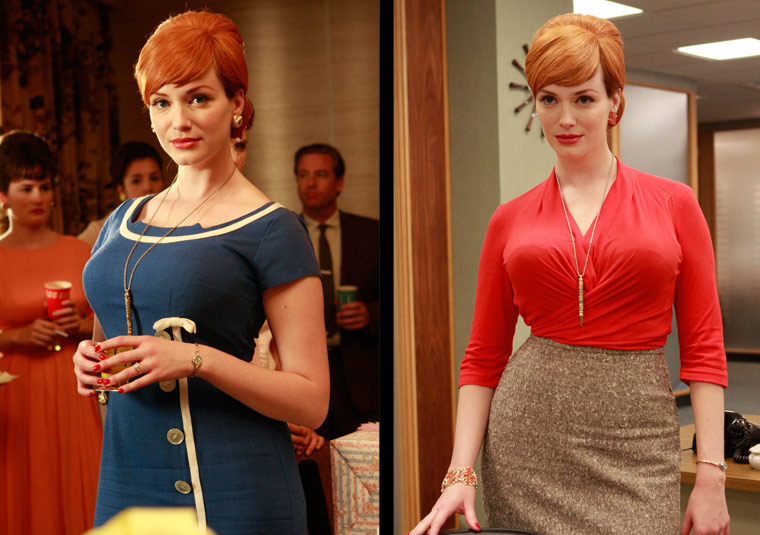
He was being diplomatic. My body is like Ally McBeal's minus the anorexia. Miami's is more like Joan Holloway from Mad Men, which is why she dressed up as Joan for Halloween (I was a lumberjack). When I tried on her bikini, I looked like a two-year-old dressed in her mother's bra. “It makes you look like you have big boobs!” chirped Miami, lying through her teeth.

Luckily, she unearthed a sports bra, which, while not exactly flattering, at least didn't look indecent. We happily trekked out to Queens and dove into the pools. After a few minutes, I noticed that my friends were giggling. I wasn't sure why, but I was euphoric enough that I joined in. Suddenly I saw something big and black out of my peripheral vision. The jacuzzi jets were blowing at just the right angle, and my sports bra top had blown up like a balloon, as though I were the Nutty Professor coming off his fat meds. All of a sudden I looked like I had a bust bigger than Dolly Parton's.

Remind me to pack my bathing suit next time I go to New York.

The spot where my bikini top blew up

Monday, January 4, 2010

Feminism, Revisited

When I was in the 7th grade, I was a raging feminist. At the time, I had a sweet, somewhat troubled young boyfriend, the Modern Jewish Boy. I adored him, and spent hours on the phone with him voicing my opinions about relations between the sexes (a subject that, at age 13, I felt I understood quite well). This was shortly after the Anita Hill allegations about Clarence Thomas, and I remember venting to him how shocking it was that a man who treated women as Thomas had could be allowed on the Supreme Court. It was also the year that Bill Clinton was elected President, and I became a devoted fan of Hillary. I wished fervently that she could one day, perhaps in 1996, be elected President, and I wrote her a letter to tell her so. On Halloween, I dressed up as Hillary and went trick-or-treating with the MJB and my friend Ms. B, who was dressed as Bill.

Three years later, now age 16, I reunited with the Modern Jewish Boy. During one of our early phone calls, his mom interrupted us to pass along a question through him: was I still a feminist? “No,” I replied, “I'm over that stage.” I cringed inwardly as I recalled those long-ago conversations. “Feminism is not a stage,” his mom told him to tell me in reply.

Despite her advice, I continued to not worry much about sexism or women's rights. I didn't consider myself to be either a feminist or a non-feminist; I believed in women's equality, of course, but I didn't see sexism as a big problem in this country. When my sister became a women's studies major and stopped shaving her legs in college, I scoffed at her and dismissed her views as extremist. I worked as an intern for a while at an African American historical house museum, lived in a largely black neighborhood in Brooklyn, taught a lot of black kids who lived in homeless shelters and whose futures looked pretty bleak, and all of these experiences made me think that racism was a much bigger problem in this day and age than sexism. When my friend Miami Nice announced that she'd be voting for Hillary Clinton in the New York State primary, I tried to dissuade her by telling her that it was more important for our country to have a black president than a woman.

All of this changed for me when I realized with a sickening shock that I spent the past three years living with a man who not only didn't respect me, but didn't respect my gender. In part my ignorance can be attributed to his skill at hiding it, but I have to admit that there were signs; he made disparaging comments about women he knew, mostly about their physical appearance. It's not that I let him get away with it entirely. I called him out on it, and told him it's not okay to talk that way about women (or anyone, but he never commented on men's bodies). But I also glossed it over in my mind, chalking it up to his Europeanness. It sounds so naive now, but it never occurred to me that he actually might think women were lesser than men. There have been times in the past few months when I have used the word “misogynist” to describe Moustache, but this doesn't accurately describe him. He doesn't hate women, he just doesn't accord them the same respect as men. As my awareness has heightened, I've begun to realize that this subtle, insidious sexism is more widespread than I thought.

And perhaps I've even been guilty of it myself. When La Moustache announced that he'd be heading off on his grand tour, my immediate reaction was two-fold. I worried that our relationship was ending and felt heart-broken that he wanted to go on a trip without me. But a series of questions also leaped into my mind: “If Moustache leaves, who will change the oil in my car? Who will wash my laundry? Who will do my taxes? Who will pay for my car insurance?” And I have to admit that this was a big reason why I didn't want him to leave: I didn't want to face the prospect of doing all these tasks myself, and I wasn't sure I could do them (or at least do them as well as he could). I am grateful for this forced reminder that I am perfectly capable of taking care of myself.

La Moustache has many admirers, including friends who know both of us. Some of these people have posted updates from his blog on Facebook, and added their own words of encouragement and support: “Good luck, Moustache! We hope 2010 will be full of adventure and joy for you. You have so many people back home who love you and are thinking of you!' (Please note that La Moustache is not on Facebook, so he has no way to actually read these words.) Upon reflection, I believe that some of these people are clueless, and don't realize how he treated me; perhaps I even gave them the impression that I was fine with his trip as I attempted to walk the fine line between conveying that I am not okay with his actions and being a bitter ex-girlfriend. However, other people know how he treated me, and either don't have a problem with it or think that he was a jerk, but that's not a reason to stop being friends with him. After all, he's famous now, and maybe if they're nice to him he might invite them to join him for part of his epic journey!

I've been nostalgic for Brooklyn lately, and there are a few musicians who remind me of my former home who have been getting frequent play on my ipod, such as Jay Z, “Best I Ever Had” by Drake, and Beyonce. Among these, I'm embarrassed to say, is Chris Brown. As I bought his album I thought to myself, “He's an asshole and I wish I weren't giving him my money, but listening to his music doesn't mean I approve of men who beat up their girlfriends.” In retrospect, I realize that by buying his music and listening to it I am tacitly supporting his behavior in the same way that people who read Moustache's blog and pass it on are supporting his behavior. I can't un-buy it, but I can and will throw it vehemently into my little iTunes trashcan and listen to some Rihanna instead. Us women gotta stick together.

Sunday, December 20, 2009

Back On the Wagon

I fell off the wagon today for a little while. It happened while I was shopping for cookie ingredients on Centre Street, on the way to a cookie-baking get-together at my sister's house. I was feeling proud of myself because I managed to get my car out and on the road all by myself, despite a dump of about six inches of snow that would have kept me house-bound for days if I were still in New York. Two teenage girls came along as I was digging my car out, and they offered to help and gave me suggestions (such as, “if you dig one front wheel out, you should be able to pull out.”) So I was feeling pretty happy and good about my fellow Bostonians when I went down to Centre Street, found a spot outside the grocery store, and parked my car while I went in to grab a few ingredients for the cookies.

But when I came out of the grocery store, I found a policeman there who had just finished putting a ticket on my car, and this is when I fell off the wagon. As I picked up the ticket and went after him to ask why he had given it to me, I had a moment of feeling very, very sorry for myself. I just moved to this city, I don't have friends here, I got turned down for a job back in New York last week that I was excited about, I'm living off unemployment, and now the parking ticket that I can't afford to pay. It was the straw that broke the camel's back. I asked the policeman in the most polite voice I could muster why I had gotten the ticket, and he said, “Emergency snow removal. It's all over the news.” I started to cry and choked on my words as I asked him how much the fine was.

I drove over to my sister's with tears streaming down my face, and simultaneously gave myself a talking-to. “Refarling, you have absolutely no reason to feel bad for yourself. This is unacceptable. You have a master's degree in education, your boyfriend was an asshole who you're better off without AND he is soon going to be replaced by a better boyfriend, the job in New York wasn't that great anyway, and you're lucky to be receiving unemployment money. You had a fantastic vacation last week, and now you're off to spend Christmas with your wonderful family. And, as if that weren't enough, you get to go spend the afternoon making cookies with your great sister and her awesome friends.”

And I was right. I am really lucky for all these reasons and even more. People in Boston are very nice, as evidenced by my sister's neighbor, who, when I arrived outside her house with red-rimmed eyes, kindly offered me a shovel to dig myself a parking spot. As I type this, I have, literally, a pile of adorable kittens lying on me, as well as a very cute bird nearby who (now that La Moustache is out of the picture) is dedicated heart and soul to me. I have amazing friends throughout the world who would welcome a visit from me anytime, and I am making new friends in Boston. Really, it doesn't get a lot better than this, and it is just plain silly to feel bad for myself when I have so much going for me. And best of all, parking tickets in Boston are about $70 cheaper than they are in New York.

Sunday, December 13, 2009

How the Other Half Lives


I moved to Brooklyn six and a half years ago after I graduated from college. I chose Brooklyn because my Canadian visa had expired and I couldn't stay in Montreal, the town I had been living in for the past few years, and because a friend in Brooklyn had an apartment available for sublet. I've loved living there, but sometimes I've wondered if perhaps I should be making life decisions more deliberately, not just letting myself be pulled along by the current. I'm laidback and content by nature, and while these are generally good qualities, they can lead to some laziness in the life decisions department. I heard Michael Chabon on the radio recently say that he's a lazy, happy person, and everything interesting he's ever done in his life he did because his wife pushed him to. I could relate, and it made me think that in the absence of such a partner I need to challenge myself and not let myself to fall into a rut.

I moved to Boston with this in mind, knowing that I could move back to New York if I want to, and that trying out life in a new city could only broaden my horizons. Lately, a cohort of my family has been pushing me to move in the opposite direction, toward the great wild western state of Idaho. My grandmother moved from the Camas Prairie to upstate New York in her late teens, and fled back west some 30 years later at the earliest opportunity; she succeeded in convincing two of her three children to move back with her, and has never quite accepted that her oldest son, my father, is an East Coaster. Only one of her seven brothers and sisters died outside the state, and he died in Utah, which is basically an outlying suburb of Boise. My family there are devoted to the Idaho way of life, and my grandmother told me that if I move out there, I would never come back. My cousin Hunter told me I am welcome to move in with him rent-free, and I'm sure he'd be willing to lend me a pickup truck if I need transportation.

With this generous invitation in the back of my mind, I traveled to Boise last week, where my affable uncle picked me up at the airport and brought me to a hot dog restaurant, remembering that when I was twelve I loved hot dogs. Everyone there kept telling me how easy and comfortable life in Idaho is, and it's true. For much of my visit the temperature hovered barely above 0º fahrenheit, but you could go for days without noticing. One travels from the house to the SUV in the garage without having to suffer a single shiver. My uncle's family has an enviably congenial rapport and spend much of their free time together; I easily joined in their activities. We spent the day last Saturday tailgating a football game (a new pastime for me). My uncle purchased a used bread truck a couple of years ago with some friends and outfitted it with a flatscreen TV, my cousin Hunter pieced together a firepit to keep us warm, and my older cousin grilled chicken wings. Friends dropped by to partake of the hot chocolate with peppermint schnapps. I could care less about football, but it didn't matter; watching the game was secondary to the socializing. It's a cultural experience everyone should have at least once. (If you're interested, let me know and I'll hook you up.)

The following day, Hunter, Grandma and I headed East to the family's ancestral home on the Camas Prairie to visit my 89-year-old great uncle Perry, who continues to singlehandedly run a wheat farm. When we asked him how he's passing his time these days, during the off season, he said he's waiting for the snow to arrive so he can shovel it. However, he's also using his free time to catch up on current events: he has a map of the Middle East hanging prominently in his living room. Hunter brought along an elk liver he had shot and wanted to share with our uncle, who has lived in the same house since the 1940s; he built it with his brothers after they returned from World War II, and his mother lived there too until she passed away in the 70s. Next door to his house is the crumbling remains of the house where he and my grandmother were raised by their stoic single mother. Hunter checked the ads in the Camas News and informed me that there are several teaching positions available in the area, as well as a pig-kissing contest, and everyone told me that Perry would be happy to have me move in (I like kissing pigs almost as much as teaching.). On the way home we stopped for a visit with my cousin Clem, who showed off his most recently restored '56 T-bird and posed for a picture with it. He's a retired principal, and he listened attentively to the sad tale of my teaching woes. I almost forgot while looking into his understanding eyes that he voted for John McCain, opposes abortion rights, and may have more in common with Todd Palin than he does with me.

I ate more fried chicken and gravy in Idaho than you could possibly imagine, along with a whole lot of other food. (And yes, I ate a hot dog too – my first in about 18 years.) I have to say that I enjoyed it, and I could imagine spending my Saturdays tailgating with my cousins, joining them for brunch on Sundays, and probably putting on a few pounds in the process. Life is pretty good in Idaho, although I'm not sure it's the life I will choose for myself. I'm beginning to suspect that you can take the girl out of Brooklyn, but it's harder to take Brooklyn out of the girl.

Next stop after Idaho was Victoria, British Columbia, home to my college friend, her Japanese husband, and their baby. I wasn't even thinking about moving there, but I couldn't help but reflect that I could probably get used to afternoon high tea and shopping at Mountain Equipment Co-op pretty easily, too.